
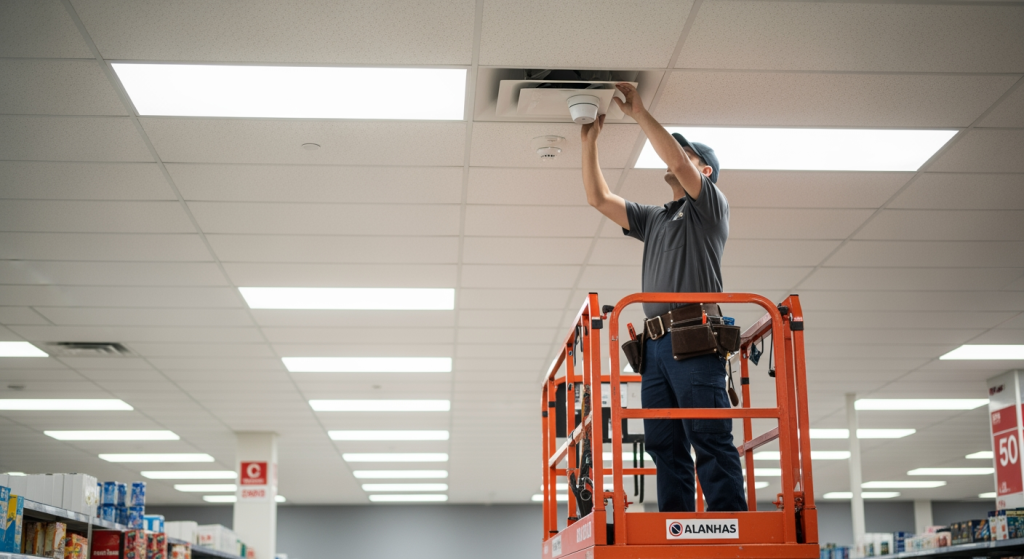
Commercial lighting maintenance is one of the simplest ways for facility teams to reduce disruptions, protect occupant comfort, and keep spaces looking professional. If you manage a retail store, restaurant, healthcare site, school, or multi-location portfolio, lighting issues can quickly become operational issues—dark aisles, uneven illumination, nuisance breaker trips, and repeated lamp failures that drain time and budget. As spring transitions into brighter days and longer operating hours for many businesses, it’s a practical moment to confirm your lighting plan is ready for consistent performance.
This guide explains what a solid commercial lighting maintenance program includes, how to spot early warning signs, and how to coordinate lighting work with broader electrical reliability goals. For a deeper look at electrical maintenance considerations that often overlap with lighting, see Commercial Electrical Systems: Safety, Efficiency, and Maintenance.
If you’re coordinating commercial lighting service in Sun Prairie, WI, the same fundamentals apply: document what you have, standardize what you can, and build a predictable inspection-and-replacement rhythm that fits your operating hours.
At a Glance: What Good Lighting Maintenance Covers
- Inventory and standardization: Know fixture types, lamp/driver specs, and what’s standardized across rooms or sites.
- Routine inspections: Catch flicker, dimming, lens damage, moisture intrusion, and loose connections before failures spread.
- Planned replacements: Group relamping/driver swaps to reduce labor and minimize after-hours callouts.
- Controls verification: Confirm timers, sensors, and scheduling match actual occupancy and operating hours.
- Electrical checks where relevant: Address recurring trips, overheating, or voltage-related symptoms that can shorten component life.
- Documentation: Track work orders, parts used, and recurring problem areas to guide future upgrades.
How a Commercial Lighting Maintenance Program Works
A maintenance program is more than swapping bulbs when they fail. In commercial environments, lighting is a system: fixtures, lamps or LED modules, drivers/ballasts, controls (sensors, dimmers, time clocks), emergency/egress components, and the electrical circuits feeding them. Maintenance succeeds when these parts are managed together—so you reduce repeat issues rather than chasing symptoms.
Start with an accurate fixture and controls inventory
Most lighting problems get expensive when teams don’t know what’s installed. A usable inventory typically includes fixture location, fixture type, lamp/module type, driver/ballast model, control type (sensor/timer/dimmer), mounting height/access method, and any site standards (preferred color temperature, lens type, or fixture family).
Use inspections to catch early failure patterns
Routine walk-throughs and targeted checks help you find issues that often precede outages: flicker, delayed start, partial illumination, discoloration, buzzing, heat damage, cracked lenses, or water staining. These symptoms can point to driver wear, loose connections, incompatible controls, or environmental stress (grease, humidity, vibration, or temperature swings).
Plan replacements instead of reacting
Many businesses benefit from scheduled group replacements in high-visibility areas (sales floors, lobbies, patient areas) and high-use back-of-house zones. Planned work can reduce ladder time, coordinate lift access, and keep lighting levels consistent—especially where appearance and safety are priorities.

The Operational Cost of Ignoring Lighting Problems
Lighting issues rarely stay contained. A single failing driver can create flicker complaints; a poorly set sensor can cause lights to shut off during work; and repeated lamp failures can signal an underlying electrical or control mismatch. The longer problems persist, the more likely you’ll see compounding impacts across operations.
- Higher labor and downtime: Frequent small fixes can consume more time than one planned service visit.
- Customer and staff experience: Dim or uneven lighting can affect merchandising, wayfinding, and perceived cleanliness.
- Safety and compliance exposure: Inadequate illumination in corridors, stairwells, or egress paths can create risk and trigger failed inspections (requirements vary by facility type and authority having jurisdiction).
- Shortened component life: Heat, moisture, vibration, or incompatible controls can reduce the life of lamps, drivers, and sensors.
- Energy waste: Misconfigured schedules, stuck-on occupancy sensors, or outdated fixtures can increase run hours and cost.
Common Lighting Maintenance Mistakes (Checklist)
- ☐ Treating every failure as “just a lamp”: Repeat outages can indicate driver/ballast issues, control problems, or electrical conditions.
- ☐ Mixing incompatible components: Not all LEDs, drivers, and dimmers/sensors work well together; mismatch can cause flicker or premature failure.
- ☐ No standard parts strategy: Too many lamp/driver types increases storage needs and slows repairs.
- ☐ Skipping fixture cleaning in harsh areas: Grease, dust, and moisture can reduce output and trap heat, especially in kitchens or back rooms.
- ☐ Ignoring “nuisance” breaker trips: Repeated trips may point to overload, failing components, or connection issues that deserve evaluation.
- ☐ Not testing controls after changes: Replacing fixtures without verifying sensors/timers can leave spaces overlit or underlit.
- ☐ Poor documentation: If you can’t see patterns by area, circuit, or fixture family, you can’t prevent repeat work.
A Practical Maintenance Plan You Can Implement
- ☐ Build a lighting asset list: Record fixture type, lamp/module, driver/ballast, control type, and access needs by area.
- ☐ Define lighting standards: Choose preferred fixture families and consistent color temperature/beam patterns for customer-facing zones.
- ☐ Set inspection routes: Schedule walk-through checks for flicker, dimming, lens damage, moisture, and sensor performance.
- ☐ Group replacements by zone: Plan relamping/driver swaps for high-use areas to reduce repeated ladder/lift setups.
- ☐ Verify controls and schedules: Confirm occupancy sensors, photocells, and timers align with real operating hours and tasks.
- ☐ Coordinate with electrical maintenance: When you see recurring trips, overheating, or buzzing, document the circuit and escalate for electrical evaluation.
- ☐ Stock critical spares: Keep a small, standardized set of lamps/drivers/sensors to shorten restoration time.
- ☐ Track outcomes: Log failures by location and component to identify “problem children” and prioritize upgrades.

Professional Insight: What Most Teams Miss About Repeat Failures
In practice, we often see repeat lighting failures traced back to a mismatch between controls and fixtures—especially when spaces have been renovated in phases. A sensor or dimmer that worked with older technology may not behave the same way with newer LED fixtures, and the symptoms can look like random lamp defects. Treating the control strategy as part of the system can reduce callbacks.
When to Bring in a Commercial Lighting Professional
- Flicker or strobing across multiple fixtures: This can indicate control compatibility issues or electrical conditions that should be assessed.
- Repeated driver/ballast failures in the same area: Patterns may point to heat, moisture, vibration, or circuit problems.
- Breaker trips tied to lighting circuits: Recurring trips warrant professional troubleshooting to avoid larger outages.
- Occupancy sensors causing operational disruptions: If lights shut off during work or stay on when spaces are empty, controls may need adjustment or replacement.
- High-ceiling or difficult-access areas: Coordinating lifts and after-hours work is often safer and more efficient with a qualified provider.
- Any egress or emergency lighting concerns: If required lighting isn’t functioning, prioritize professional evaluation to meet facility requirements.
Frequently Asked Questions
How often should a facility check its lighting systems?
Many teams use routine walk-throughs for obvious issues (outages, flicker, damaged lenses) and schedule deeper checks for controls and electrical connections based on site usage, access constraints, and internal standards.
Why do LED fixtures flicker even after replacing the light source?
Flicker can be caused by driver wear, loose connections, incompatible dimmers or sensors, or power quality conditions. A structured troubleshooting approach helps isolate whether the issue is the fixture, the control, or the circuit.
What should be documented after a lighting repair?
At minimum: location, fixture type, component replaced (lamp/module/driver/ballast/sensor), part numbers, observed symptoms, and any follow-up recommendations. This history helps identify recurring issues and supports standardization.
How can multi-site operators keep lighting consistent across locations?
Standardize fixture families and control approaches where possible, keep a shared parts list, and track failures by site and area. Consistency improves repair speed and makes performance easier to compare.
Is lighting maintenance connected to broader electrical reliability?
Yes. Recurring lighting failures can be a signal of circuit loading, connection issues, or control problems. Coordinating lighting work with electrical maintenance can reduce repeat failures and unplanned disruptions.
Moving Forward
A dependable lighting maintenance program starts with knowing what you have, inspecting for early warning signs, and planning replacements to reduce repeat work. When you connect fixtures, controls, and electrical conditions into one maintenance view, you can improve consistency and limit surprises. Use your work order history to spot patterns and prioritize the areas that create the most disruption.
Learn More About Our Services
Discover how we can help you achieve your goals.