
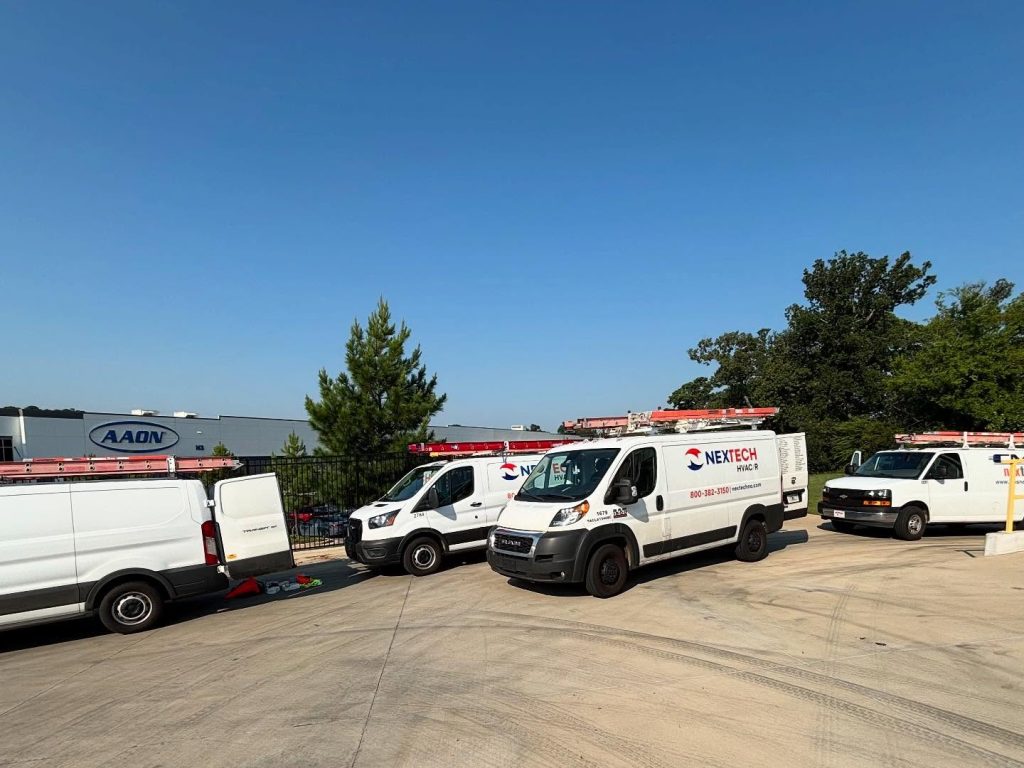
Choosing whether to repair or replace a commercial HVAC system is a budget decision, a comfort decision, and—if you manage temperature-sensitive spaces—a business continuity decision. This comparison is written for facility managers, operations leaders, and multi-site teams who need a practical way to evaluate options without getting lost in technical rabbit holes. As spring transitions into warmer days, many teams start noticing the small issues (uneven cooling, longer runtimes, nuisance alarms) that turn into bigger disruptions at the worst possible time.
Before you compare bids, it helps to align on what “good” looks like: stable comfort, predictable operating costs, and a service plan that fits your hours and occupancy patterns. If you want a deeper baseline on planning and upkeep, review Understanding Commercial HVAC System Maintenance: Best Practices to frame the decision around risk and maintainability—not just the next invoice.
For local businesses weighing repair vs. replacement, Nextech’s team supports commercial HVAC service in Denton, TX with a focus on commercial facilities, including retail, restaurants, healthcare clinics, education sites, and other multi-location operations.
The Essentials: Repair vs. Replacement
- Repair is usually the better fit when the issue is isolated, downtime is manageable, and the system still operates efficiently for your space.
- Replacement tends to win when failures are recurring, parts are difficult to source, or comfort and energy performance are consistently off-target.
- Compare options using the same criteria: reliability risk, total cost over time, install complexity, and how the decision affects occupants and operating hours.
- Ask for a clear scope: what’s being fixed or replaced, what’s excluded, and what “done” looks like (performance targets, controls behavior, documentation).
- If your site can’t tolerate temperature swings (food, pharmaceuticals, patient care), prioritize uptime planning and redundancy—not just lowest upfront cost.
Repair vs. Replace: Breaking Down the Decision
At a high level, repairing restores function by correcting a specific fault—like a failed component, a control issue, or a refrigerant-related problem—so you can return to normal operation. Replacement swaps out major equipment (or a full system) to reset reliability and performance expectations, often paired with updated controls, airflow balancing considerations, and commissioning requirements.
The most useful way to compare is to treat both options as investments with different risk profiles. Repair can be cost-effective and fast, but it may not address underlying wear, capacity mismatch, or chronic performance issues. Replacement can reduce repeat failures and improve consistency, but it requires planning around lead times, access constraints, and disruption to operations.
Side-by-side comparison criteria
| Criteria | Repair (Typical Strength) | Replace (Typical Strength) |
|---|---|---|
| Upfront spend | Lower initial cost for a defined issue | Higher initial cost, broader scope |
| Speed to restore comfort | Often faster if parts/labor are available | Depends on equipment selection, scheduling, and install window |
| Reliability risk | Can remain elevated if multiple components are aging | Typically lower once properly installed and commissioned |
| Operating cost stability | May improve slightly; depends on root cause | Often improves when right-sized and optimized |
| Disruption to operations | Usually limited to the repair window | More planning required (access, crane days, shutoffs, tenant coordination) |
| Long-term planning | Good for buying time when a capital plan is pending | Good for resetting lifecycle and standardizing across sites |
Pros and cons by option
Option A: Repair
- Pros: Lower upfront cost, faster return to service in many cases, less operational disruption.
- Cons: May not resolve repeat failures, can create “whack-a-mole” maintenance, performance may remain inconsistent if the system is fundamentally mismatched or worn.
Option B: Replace
- Pros: Improved reliability runway, opportunity to correct sizing/airflow/control issues, better standardization for multi-site maintenance.
- Cons: Higher capital cost, more coordination, potential downtime planning required, may involve related work (curbs, electrical, controls integration).

The Real Business Cost of Waiting Too Long
The wrong call isn’t always “repair” or “replace”—it’s waiting until your choices narrow. When a system degrades slowly, teams often absorb the impact as small operational annoyances: hot/cold complaints, product risk, overtime resets, and longer runtimes. Over time, those issues can show up as higher service frequency, more after-hours scheduling, and avoidable disruption to customers and staff.
Delaying a replacement decision can also reduce your ability to plan around business hours. If you end up forced into a rushed project window, you may have fewer options for equipment selection, phasing, or temporary comfort strategies. On the other hand, replacing too early can tie up capital that might be better used elsewhere if a targeted repair plus a maintenance plan would have stabilized performance.
Costly Mistakes to Avoid (Quick Checklist)
- Comparing a repair quote to a replacement quote without matching scope: Replacement often includes controls, electrical, rigging, or curb work—make sure you’re comparing apples to apples.
- Ignoring the “repeat failure” pattern: If the same area of the system keeps failing, ask what’s driving it (controls logic, airflow, electrical quality, operating conditions).
- Skipping operational constraints: Roof access, tenant coordination, food service hours, and noise restrictions can change the real cost of either option.
- Focusing only on unit price: A cheaper fix can cost more if it increases downtime risk or forces frequent service calls.
- Not documenting performance expectations: Without clear targets (comfort, run behavior, scheduling, alarms), it’s harder to verify results after the work is done.
A Smart Action Plan for Your Next Decision
- Define the impact: List the spaces affected, the business risk (occupant comfort, product protection), and your acceptable downtime window.
- Request a root-cause explanation: Ask what failed, why it failed, and what would prevent recurrence (not just the part number).
- Ask for two paths: A “stabilize” repair option and a “reset lifecycle” replacement option, each with clear inclusions/exclusions.
- Map costs over time: Include expected service frequency, after-hours labor likelihood, and operational disruption—not only the invoice total.
- Plan around operations: Coordinate access, work windows, and communication to occupants or tenants before scheduling.
- Align on maintenance after the work: Confirm filter strategy, coil cleanliness expectations, controls check cadence, and documentation handoff.

Professional Insight: What Most Teams Miss
In practice, we often see repair-vs.-replace decisions become much clearer when the team documents how the equipment is actually being used—hours of operation, occupancy swings, and any spaces that can’t tolerate temperature drift. That context helps separate “a part failed” from “the system is being pushed outside its practical operating pattern,” which is where repeat issues tend to live.
When It’s Time to Bring in a Commercial HVAC Partner
- Recurring service calls: You’re addressing symptoms repeatedly rather than solving a stable underlying issue.
- Unpredictable comfort: Persistent hot/cold zones, humidity complaints, or long recovery times after setpoint changes.
- Operational risk is high: The site supports food, medication, patient care, or other temperature-sensitive operations.
- Controls behavior is confusing: Scheduling, alarms, or setpoints don’t behave consistently across similar spaces.
- Project coordination is complex: Roof access constraints, multi-tenant communication, or limited work windows require structured planning.
Frequently Asked Questions
How do I decide between fixing a unit and planning a full upgrade?
Start with three questions: Is the problem isolated or recurring, how much downtime can your operation tolerate, and do you have a capital plan window. A provider can help you compare a stabilization path versus a longer-term reset path with clear scopes.
What information should I have ready before I request quotes?
Have the site address, equipment list (if available), a description of symptoms, hours of operation, and any access constraints (roof hatches, tenant coordination, work-hour limits). If you track prior service history, include the last few work orders.
Will replacement automatically lower my energy costs?
Not automatically. Energy outcomes depend on correct sizing, airflow, controls setup, and how the building is operated. A well-scoped project should include performance expectations and a plan to verify operation after installation.
How can multi-site operators standardize decisions across locations?
Use a consistent scorecard: failure frequency, operational risk, comfort impact, and total cost over time. Standardizing equipment types and documentation can also simplify maintenance and reduce training and parts variability.
Taking Action with Confidence
Repair makes sense when the issue is contained and the system still supports your operational needs with manageable risk. Replacement is often the stronger move when reliability is trending the wrong direction or when you need a predictable performance baseline across the facility. The best next step is to compare both options using consistent criteria and a clearly defined scope. With the right documentation and planning, you can reduce surprises and protect comfort, uptime, and budgets.
Get Your Free Quote
Find out how we can help with a no-obligation quote.