
Budgeting for a commercial heating and cooling program can feel like trying to predict the next “small” repair that turns into a capital project. If you manage facilities, operations, procurement, or multi-site maintenance, you’re balancing comfort, uptime, and spend—often with limited visibility into what’s truly urgent versus what’s simply noisy. In spring, many teams use the seasonal transition to reset priorities, review vendor performance, and plan for the months ahead.
A smart budget isn’t just a number—it’s a plan for risk, response, and asset life. It should account for preventive work, likely repairs, and longer-term replacements, while also clarifying what you expect from a service partner. If you want a deeper foundation on maintenance planning, start with Preventative Maintenance for Commercial HVAC Systems.
For local planning and service coordination, this guide pairs well with providers who support commercial HVAC maintenance in Worthington, OH and understand the realities of retail, healthcare, education, restaurants, and other commercial environments.
Bottom Line Upfront: Budgeting Essentials
- Build a three-lane budget: planned maintenance, reactive repairs, and capital replacement—so one surprise doesn’t consume the entire year.
- Budget around risk, not guesses: prioritize assets that impact revenue, temperature-sensitive product, or customer comfort.
- Define vendor scope in writing: response expectations, approval workflows, documentation, and after-hours procedures.
- Standardize across sites: consistent equipment lists, service levels, and reporting make spend predictable and comparable.
- Use documentation to control cost: clear diagnostics, options, and “repair vs. replace” reasoning reduce repeat visits and churn.
How Commercial HVAC Budgeting Actually Works
Commercial HVAC budgeting is the process of planning the total cost of ownership for your comfort systems across a fiscal period. The goal is to reduce unplanned downtime and avoid “panic spending” by assigning dollars to the work you can schedule and preparing for what you can’t.
1) Planned maintenance (predictable spend)
This includes routine inspections, filter strategies, coil and drain management, belt checks, sensor verification, and control checks—performed on an agreed cadence. For procurement teams, planned work is where you can negotiate consistency: defined tasks, defined frequencies, defined reporting.
2) Reactive repairs (controlled variability)
Even with strong maintenance, components fail. A practical budget includes a repair allowance tied to asset criticality and age. The aim isn’t to eliminate repairs—it’s to reduce repeat failures and shorten diagnosis-to-fix timelines through better documentation and parts planning.
3) Capital replacement (the long game)
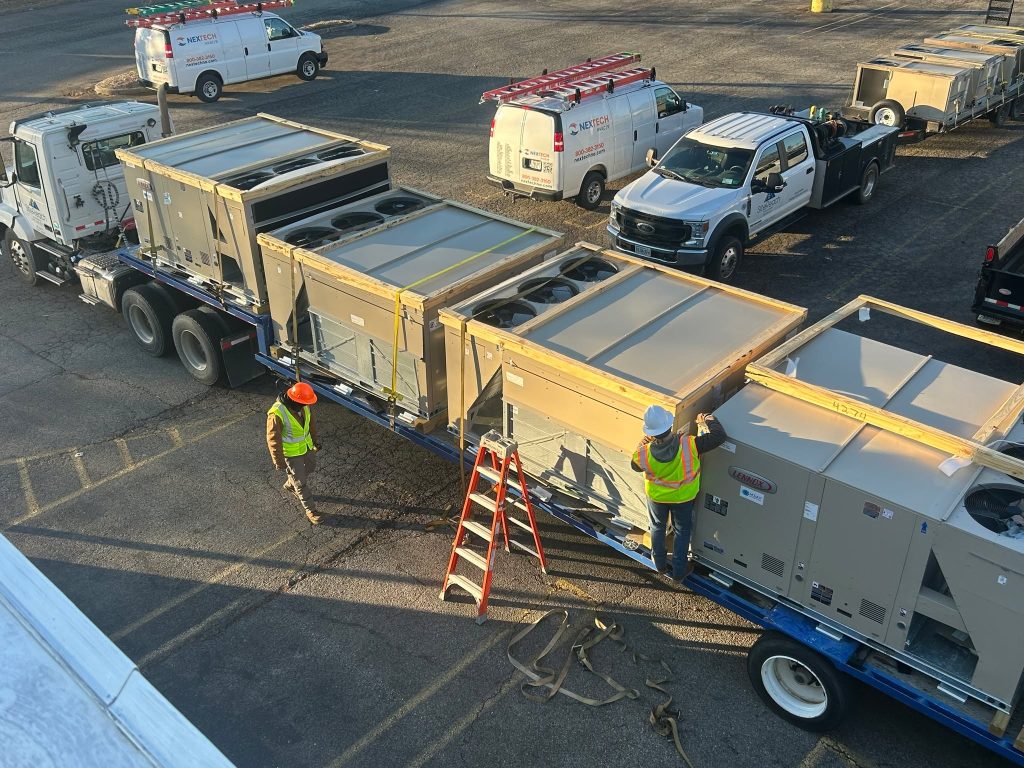
Replacement planning covers rooftop units, split systems, make-up air units, controls upgrades, and other major projects within typical commercial environments. A capital plan helps you avoid replacing equipment only when it fails at the worst possible time.

The Real Cost Drivers That Shape Your Budget
Budget accuracy improves when you tie dollars to the factors that actually move cost—rather than spreading a flat number across every site.
Asset criticality and business impact
- Revenue exposure: customer comfort, tenant satisfaction, and operational continuity.
- Temperature-sensitive environments: spaces where comfort or process requirements are tighter than typical office areas.
- Downstream effects: a failing unit can drive complaints, overtime, and rushed shipping for parts.
Equipment age, condition, and maintenance history
Two identical units can behave very differently if one has consistent service records and the other has gaps. History matters because it highlights recurring issues (for example, repeated capacitor failures or persistent airflow problems) that can justify targeted corrective work or replacement planning.
Controls and visibility
Limited visibility often increases cost because problems are discovered late. When alarms, setpoints, schedules, and trends are unclear, vendors spend more time diagnosing—and you spend more time approving work with incomplete information.
Vendor Selection: Procurement Criteria That Protect the Budget
In vendor selection, the lowest price per visit can be expensive if it leads to repeat calls, inconsistent documentation, or unclear accountability. Budget protection comes from how the relationship is structured and managed.
Scope clarity (what’s included vs. excluded)
- Maintenance task lists: define what “PM” includes so you can compare bids fairly.
- Coverage hours: confirm standard and after-hours processes and who authorizes what.
- Site access rules: keys, escorts, roof access, and safety requirements to reduce wasted trips.
Service model and accountability
- Self-performing vs. subcontracting: understand who will actually arrive onsite and how handoffs are managed.
- Documentation standards: require consistent reporting—findings, photos when available, and clear recommendations.
- Communication expectations: who calls whom, when updates happen, and how escalations work.
Approval workflows that match your organization
Procurement friction is a hidden cost. A strong vendor can work within your approval thresholds by presenting options (good/better/best), clarifying risk, and documenting why a recommendation is being made—without forcing a last-minute decision.
What’s at Stake If You Underfund (or Misallocate) the Plan
Budgeting issues rarely show up as “budgeting issues.” They show up as repeat calls, uncomfortable spaces, and a growing backlog of deferred work.
- More downtime and disruption: deferred maintenance can increase the chance of failures during peak operating periods.
- Higher total service cost: repeated diagnostics and return trips can add up when root causes aren’t addressed.
- Shortened equipment life: chronic airflow, drainage, or control issues can stress components over time.
- Harder procurement decisions: without a plan, replacements become rushed, and bids are harder to compare.
- Inconsistent site experience: multi-site brands can end up with uneven comfort and uneven spend.

Common Budgeting Mistakes (Use This Checklist)
- ☐ Budgeting only for emergencies: skipping planned work often increases reactive spend and disruption.
- ☐ Treating every site the same: critical locations and high-traffic buildings typically need different service levels.
- ☐ No asset inventory: without a current equipment list, you can’t forecast replacements or compare vendor recommendations.
- ☐ Unclear “repair vs. replace” rules: teams lose time when thresholds and approval paths aren’t defined.
- ☐ Accepting vague invoices: unclear notes make it difficult to validate work, spot repeat issues, or manage warranties.
- ☐ Ignoring communication fit: a vendor can be technically capable but still create cost through poor coordination.
Your Budget Action Plan (Procurement-Friendly Steps)
- ☐ Build (or refresh) your asset list: capture unit type, location, approximate age, and known issues for each site.
- ☐ Segment by criticality: label equipment as high/medium/low impact based on business disruption if it fails.
- ☐ Set three budget buckets: planned maintenance, reactive repairs allowance, and capital replacement planning.
- ☐ Standardize PM scope and reporting: require consistent checklists and documentation across all sites.
- ☐ Define approval thresholds: set who approves what, and require options with risk-based recommendations.
- ☐ Track repeat issues: flag recurring calls by asset to identify root-cause fixes or replacement candidates.
- ☐ Hold quarterly review meetings: review spend vs. plan, recurring failures, and upcoming capital needs.
Professional Insight: Where Budgets Most Often Break
In practice, we often see budgets get derailed not by one big failure, but by a steady stream of “small” issues—recurring comfort complaints, intermittent shutdowns, and vague service notes that make each visit start from scratch. When teams standardize documentation and define decision rules for repairs, the work becomes easier to forecast and easier to manage across locations.
When It’s Time to Bring in a Commercial Partner
Consider professional support when any of the following are true:
- You’re seeing repeat calls on the same units: recurring issues often signal a root cause that needs a planned fix.
- You lack a current equipment inventory: budgeting without asset data usually leads to surprises.
- Approvals are slowing down repairs: misaligned workflows can increase downtime and total cost.
- You manage multiple locations: standardization and reporting become critical for spend control.
- You need clearer replacement planning: a structured capital roadmap reduces rushed decisions.
Common Questions About Budgeting and Procurement
How should we split spending between maintenance, repairs, and replacement?
A practical approach is to separate planned maintenance from reactive repairs and then maintain a rolling capital plan for replacements. The exact split depends on equipment condition, criticality, and how standardized your sites are.
What should we require in service documentation for better cost control?
Ask for clear problem descriptions, diagnostic steps performed, parts used (or recommended), and a concise recommendation with options when appropriate. Consistent documentation helps identify repeat failures and validates invoices.
How do we compare vendors beyond the bid price?
Compare scope definitions, reporting standards, communication cadence, after-hours process, and how approvals are handled. A vendor that reduces repeat visits and improves coordination may lower total cost even if line-item pricing is higher.
What is a self-performing contractor, and why does it matter?
A self-performing contractor uses its own technicians for the work rather than relying primarily on subcontractors. For procurement, it can affect consistency, accountability, and how quickly issues are diagnosed and resolved.
What information should we have ready before requesting a proposal?
Provide an equipment list (even if imperfect), site hours/access requirements, service history if available, and your approval thresholds. The clearer your inputs, the easier it is to receive comparable proposals.
Taking Control of Next Year’s Spend
A reliable budget is built on visibility: asset data, consistent maintenance scope, and vendor accountability. When procurement and facilities align on approval rules and reporting standards, you reduce repeat work and make replacements more predictable. Treat your budget as an operating plan—not just a number—and it becomes easier to protect comfort, uptime, and cash flow.
Learn More About Our Services
Discover how we can help you achieve your goals.