
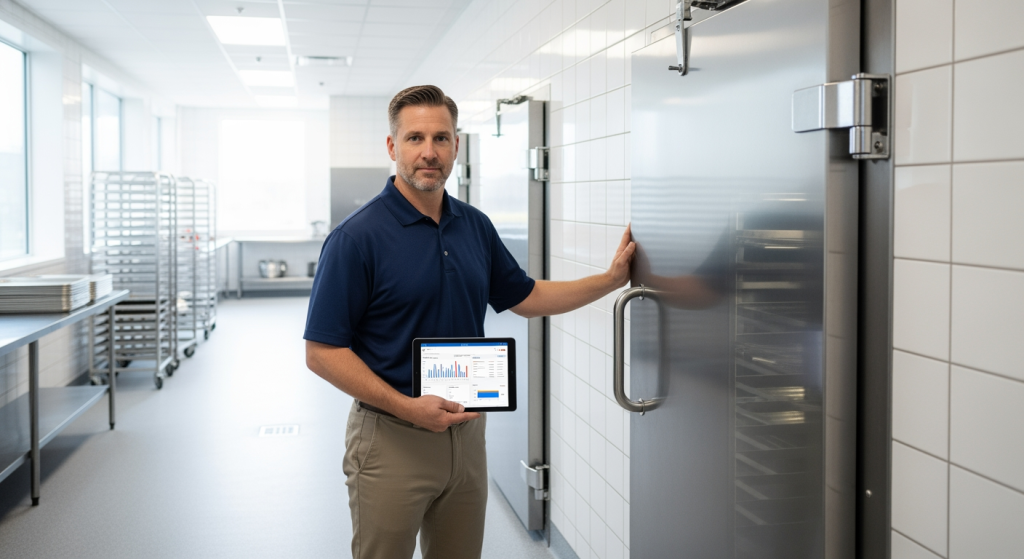
Keeping cold storage stable is one of the fastest ways to protect inventory, support food safety goals, and reduce avoidable downtime. If you manage a restaurant, grocery, convenience store, pharmacy, or healthcare facility in the New Braunfels, TX / San Antonio area, you’ve likely faced the same questions: What temperatures are “safe,” how detailed should logs be, and when is it time to bring in a commercial refrigeration service provider instead of waiting it out? As spring transitions into warmer weather, refrigeration systems often work harder, and small issues can show up as bigger performance swings.
This FAQ breaks down practical, operations-friendly guidance for facility teams—without DIY repair steps. For deeper system-level context, see Commercial Refrigeration Systems: Types and Maintenance Best Practices.
What You Need to Know First About Commercial Refrigeration Service
- Temperature stability matters as much as the setpoint. Frequent swings can be a sign of airflow, controls, or component issues.
- Logs are most useful when they drive action. A simple, consistent process beats a complex log nobody reviews.
- “Looks fine” isn’t the same as “operating efficiently.” Rising runtimes and slow recovery can signal hidden strain.
- Food safety and product integrity are operational risks. Cold-chain interruptions can create waste, rework, and compliance headaches.
- Escalate sooner when you see repeat alarms or recurring icing. Repeated symptoms often mean the root cause wasn’t addressed.
How Food Safety, Logs, and Service Decisions Fit Together
Commercial refrigeration reliability is usually a process issue as much as a mechanical one. Your team sets expectations (target ranges, alarm thresholds, logging cadence), observes performance (logs, alarms, product condition), and responds with the right level of support (operational correction vs. professional troubleshooting).
Temperature logs help you spot patterns—like “same time every day” warming events, slow pull-down after deliveries, or cases where one unit struggles while others remain stable. Those patterns can inform what to check operationally (door discipline, stocking practices, airflow blockage) and what to escalate (persistent alarms, repeated icing, abnormal noise, or poor recovery).
The Real Operational Cost of Unstable Refrigeration
When refrigeration performance drifts, the impact isn’t limited to a single box running warm. It can affect multiple parts of your operation:
- Inventory loss and shrink: Temperature excursions can force product disposal or discounting.
- Labor disruption: Staff time shifts to moving product, monitoring temps, and documenting corrective actions.
- Customer experience: Out-of-spec product or unavailable menu items can create churn and complaints.
- Compliance exposure: In many environments, you may need documentation showing monitoring and response steps. Requirements vary—confirm what applies to your facility and industry.
- Equipment wear: Extended runtimes and short cycling can accelerate component fatigue and increase the chance of an unplanned outage.
Common Missteps That Undermine Temperature Control (Checklist)
- Logging without reviewing: If nobody trends the data, recurring problems can persist until a failure occurs.
- Inconsistent logging times: Random intervals make it harder to compare performance day-to-day.
- Overfilling or blocking airflow: Product stacked against vents can cause warm zones and longer recovery.
- Ignoring “minor” alarms: Intermittent alarms can be early warnings of a developing issue.
- Resetting breakers or cycling power repeatedly: This can mask symptoms and complicate diagnosis.
- Delaying service after repeat icing: Ice can be a symptom of underlying performance problems that won’t resolve on their own.
A Practical Temperature-Log and Service Readiness Plan (Checklist)
- Define acceptable ranges per unit type and product: Document targets and who approves changes.
- Set a consistent logging cadence: Use the same times/intervals so trends are meaningful.
- Record context with exceptions: Note deliveries, door issues, defrost events, or unusual loading.
- Use “trigger points” for escalation: Decide what patterns require a call (repeat alarms, slow recovery, recurring icing, abnormal noise).
- Standardize how staff respond: Who checks the unit, who moves product, and who documents actions.
- Keep unit information accessible: Asset ID, location, and a short history of recent issues helps speed triage.

Professional Insight: What Most Teams Miss in Early Warning Signs
In practice, we often see that “it’s running” becomes the default definition of success—until a unit can’t recover after normal door openings or restocking. Slow pull-down and longer runtimes are common early signals that performance is drifting, even when the box still reaches setpoint eventually.
When It’s Time to Call for Professional Support
If your team is deciding whether to escalate, these are common thresholds that justify bringing in qualified commercial support:
- Repeated temperature excursions: More than a one-off event, especially if it follows a pattern.
- Recurring icing or water where it shouldn’t be: Persistent ice buildup or frequent cleanup needs.
- Alarms that return after resets: If alerts reappear, the underlying condition may still be present.
- Unusual noise, vibration, or odor: New sounds or smells can indicate failing components.
- Product quality concerns: Softening frozen items, condensation in packaging, or customer complaints.
- Multiple sites showing similar issues: A pattern across locations can point to process, settings, or maintenance consistency problems.
Your Questions, Answered: Refrigeration, Logs, and Service Calls
How detailed should our temperature logs be?
They should be detailed enough to show consistency and response: the reading, the time, the unit ID/location, and notes when something is out of range. The goal is trend visibility and clear corrective-action documentation, not paperwork for its own sake.
What’s the difference between a one-time spike and a real problem?
A one-time spike often has a clear operational cause (heavy restocking, prolonged door opening) and recovers quickly. A recurring spike—especially at similar times—or slow recovery can indicate a performance issue worth escalating.
Can we just adjust the setpoint if we’re running warm?
Setpoint changes can sometimes mask underlying problems and may create new ones (like freezing product or driving longer runtimes). If you’re consistently warm, it’s usually better to document conditions and have the system evaluated.
What information should we have ready when we call for support?
Have the unit location/asset ID, the type of equipment (walk-in, reach-in, prep table, ice machine, etc.), recent temperature-log notes, any alarms observed, and what changed operationally (deliveries, loading, door issues). This helps speed troubleshooting.
Do we need planned maintenance if the unit seems fine?
Planned maintenance is typically used to reduce surprise failures, improve consistency, and catch wear before it becomes downtime. If uptime and product protection are priorities, a proactive plan can help you manage risk more predictably.
Taking Action: Protect Product and Reduce Surprises
Strong refrigeration performance is built on consistent monitoring, clear escalation triggers, and timely professional support when patterns show up. Temperature logs are most valuable when they help you spot drift early and document how your team responds. If you’re seeing repeat alarms, slow recovery, or recurring icing, it’s usually a sign to stop guessing and get the system evaluated. Still have questions about what your logs are telling you or how to standardize response across locations?
Get in Touch
Fill out our quick form and we’ll get back to you within 24 hours.