
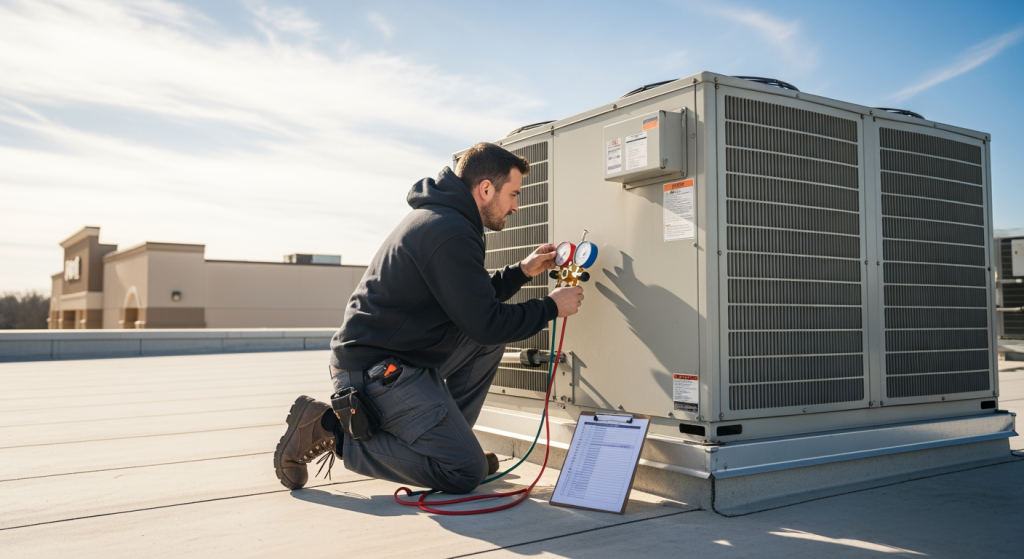
Spring is when many facility teams discover how hard their heating and cooling equipment worked through winter—and what didn’t hold up. If you manage a commercial building, restaurant, retail space, healthcare site, or other business facility in Daphne, AL, a structured seasonal checklist can help you reduce comfort complaints, protect temperature-sensitive operations, and avoid preventable downtime. This guide focuses on practical, non-DIY steps you can coordinate with your internal team and a qualified provider, including what to inspect, what to document, and when to schedule service. For a deeper look at what to expect from a provider relationship, see Preventative Maintenance for Commercial HVAC Systems.
Because spring is a common transition period into sustained cooling demand, it’s a smart time to confirm your equipment, controls, and maintenance plan are ready before higher runtimes expose small issues.
The Essentials for a Spring Readiness Check
- Confirm your maintenance history: Verify the last filter changes, coil cleaning, and belt inspections are documented for each unit.
- Prioritize critical areas: Identify spaces where temperature or humidity swings create business risk (server rooms, pharmacies, prep areas, dining rooms).
- Check comfort patterns: Track recurring hot/cold complaints by zone—repeat issues often point to airflow, controls, or scheduling problems.
- Inspect drainage and moisture control: Clogged condensate drains and poor humidity control can lead to odors, staining, or nuisance shutdowns.
- Validate controls and schedules: Ensure thermostats/BAS schedules match operating hours, including weekends and seasonal changes.
How Spring Maintenance for Commercial Systems Typically Works
A spring visit is usually about verifying cooling performance, airflow, and control accuracy before peak load conditions. In many facilities, the goal isn’t just “cold air”—it’s stable temperatures across zones, predictable runtimes, and fewer surprises during business hours.
At a high level, a provider will often review equipment condition (filters, belts, coils, electrical connections), confirm safe drainage, and evaluate performance indicators like supply/return temperature split and overall airflow. For refrigeration-adjacent operations (restaurants, grocery, convenience), spring planning may also include coordinating HVAC checks with walk-in cooler/freezer maintenance schedules so you’re not chasing multiple disruptions.

Why Timing Matters Before Cooling Demand Spikes
Waiting until the first sustained warm stretch can turn manageable maintenance into urgent troubleshooting. Small issues—like restricted airflow, dirty coils, drifting sensors, or weak capacitors—may not show up during mild weather, but they can surface quickly once systems run longer each day.
From a business perspective, delays can also affect scheduling. If multiple locations or multiple units need attention, spring is often when you have more flexibility to plan work around operating hours, food safety requirements, and customer traffic patterns.
Common Spring Missteps to Avoid (Quick Checklist)
- Assuming “no complaints” means “no problems”: Some failures build quietly until runtimes increase.
- Skipping documentation: Without dates, readings, and notes, recurring issues are harder to diagnose and budget for.
- Ignoring moisture red flags: Musty odors, ceiling stains, or frequent drain clogs can indicate underlying drainage or humidity issues.
- Overlooking control changes: Thermostat replacements, tenant changes, or BAS edits can create schedule conflicts and comfort problems.
- Not planning for access: Rooftop units and mechanical rooms often require keys, escorts, ladders, or after-hours coordination.
- Only focusing on one unit: If one RTU is struggling, similar units may be trending the same way—especially across multi-site portfolios.
Your Spring Action Plan for Reliable Cooling
- Build a unit-by-unit inventory: List equipment type, location, model/serial (if available), and which areas each unit serves.
- Collect last season’s issues: Compile comfort tickets, nuisance trips, and any repeated resets or lockouts.
- Confirm filter strategy: Align filter type and change frequency with occupancy, hours, and indoor air needs.
- Schedule a preventative visit early: Plan service before extended cooling runtimes begin to reduce business disruption.
- Ask for clear findings: Request notes that separate “monitor,” “repair soon,” and “repair now” items to support budgeting.
- Coordinate with operations: For restaurants and retail, plan work around deliveries, peak traffic, and food handling windows.
- Set a response plan: Define who approves repairs, who gets notified, and how access is handled across shifts.
Professional Insight: The Pattern Behind Repeat Comfort Complaints
In practice, we often see that recurring hot/cold calls aren’t caused by a single “bad unit,” but by a combination of airflow restrictions, control scheduling drift, and small component wear that only becomes obvious when cooling demand rises.
When It’s Time to Bring in a Commercial Service Team
Consider professional support if you’re seeing any of the following:
- Frequent cycling, lockouts, or resets: Especially if the issue returns after basic restarts.
- Persistent humidity or odor issues: These can indicate drainage, coil, or ventilation problems that need proper evaluation.
- Uneven temperatures across zones: Hot/cold spots often point to airflow balancing, control, or equipment performance issues.
- Rising energy use without operational changes: A sign that equipment may be working harder than it should.
- Temperature-sensitive operations at risk: Pharmacies, healthcare sites, and food operations should treat instability as a priority.
If you’re aligning seasonal planning with a broader service strategy, you can also review our services in Daphne, AL to see the types of commercial support typically available for local and multi-site facilities.
Common Questions About Spring HVAC Planning
What should a facility manager have ready before scheduling seasonal service?
Have a current equipment list, recent comfort complaints by area, site access requirements, and any operational constraints (hours, food handling windows, tenant coordination).
How do I know if my cooling performance is slipping?
Common indicators include longer runtimes, uneven temperatures, more frequent thermostat adjustments, recurring nuisance trips, and rising energy use without a change in hours or occupancy.
Is filter replacement enough for seasonal readiness?
Filters are important, but they’re only one part of readiness. Airflow, coil condition, drainage, controls, and electrical components also affect reliability and comfort.
What’s the difference between planned maintenance and a repair call?
Planned maintenance is scheduled to reduce risk and catch issues early. Repair calls are typically reactive and focused on restoring operation after a problem is already affecting comfort or uptime.
Taking Action Before Peak Cooling Season
A spring checklist helps you move from reactive calls to planned readiness—especially when multiple zones, tenants, or locations depend on consistent comfort. Start by organizing your equipment information, documenting recurring issues, and scheduling a preventative visit early enough to address findings without disruption. The goal is simple: fewer surprises when cooling demand becomes consistent.
Book Your Consultation
Schedule a free consultation with our experts.