
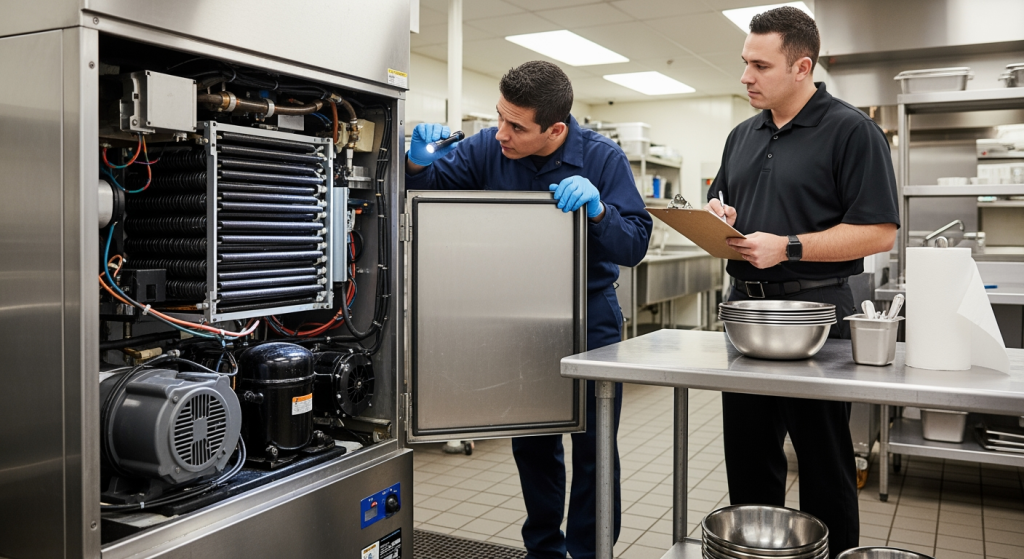
Keeping an ice machine reliable is a daily operations issue, not just a “back of house” detail—because ice touches beverages, food handling, and guest experience. This how-to is for restaurant operators, kitchen managers, and multi-site facilities teams who need a repeatable way to track performance, spot early warning signs, and know when to bring in qualified commercial support. As spring transitions into warmer weather, many teams also see higher ice demand and longer run times, which can expose small maintenance gaps fast. If you want a deeper baseline on how commercial systems are evaluated and diagnosed, use this reference on Commercial HVAC System Troubleshooting and Diagnostics to align internal checks with what technicians typically verify on service calls.
The Essentials for Keeping Ice Reliable
- Track three operator signals: ice quality, production rate, and unusual noise/leaks—these usually change before a full failure.
- Standardize cleaning and sanitizing cadence: follow your equipment manual and use food-safe products approved for the unit.
- Protect airflow and water supply: dirty filters/vents and scale-prone water are common root causes of slow production and poor cube quality.
- Document every change: date, observation, what was done, and who did it—especially across multiple locations.
- Know the handoff line: sealed refrigeration issues, electrical faults, and persistent leaks typically require a commercial technician.
How Ice Machine Maintenance Works in a Restaurant Setting
At a practical level, ice machine upkeep is a mix of operator-controlled tasks (inspection, cleaning, sanitizing, and basic environment checks) and professional service (diagnostics, component testing, refrigeration-side repairs, and electrical verification). Operators usually control the conditions that drive performance—airflow around the condenser, cleanliness of the bin and food-zone surfaces, and water quality inputs. Pros typically handle the work that requires tools, training, and access to internal components, especially when it involves electrical systems, sealed refrigeration circuits, or recurring performance problems that don’t resolve after routine cleaning.
A good program separates what you track (symptoms and trends) from what you touch (safe, manual-approved tasks). That separation helps you avoid accidental damage, reduce downtime, and create cleaner service calls when you do need support.
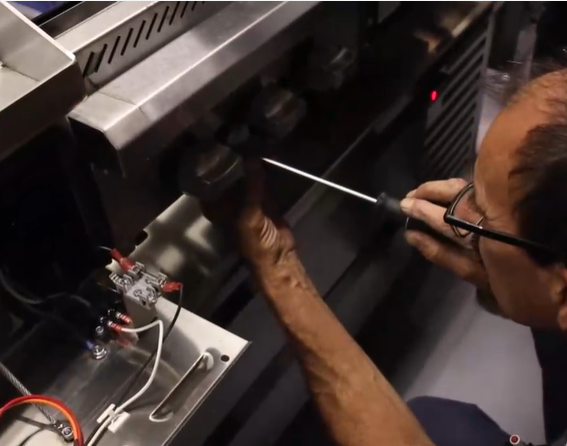
The Real Operational Cost of Skipping Ice Care
When ice production drops or quality changes, the impact is rarely isolated. You may see slower drink service, inconsistent beverage presentation, and more staff time spent troubleshooting or running to alternate ice sources. If a unit develops scale, biofilm, or drainage issues, it can also create cleanup work and disrupt standard sanitation routines.
From a budget standpoint, small issues can become larger repairs if they persist—especially when airflow restrictions, water scale, or neglected cleaning contribute to longer run times and extra wear. From a risk standpoint, unclear maintenance records can make it harder to prove what was done, when, and by whom—particularly for multi-unit operators trying to standardize procedures.
Common Missteps That Create Breakdowns (Checklist)
- Using non-approved chemicals or tools: harsh cleaners or abrasive pads can damage food-zone surfaces and internal components.
- Cleaning without documenting: if production issues return, you lose the timeline needed for efficient troubleshooting.
- Ignoring ventilation clearances: blocked airflow can lead to poor performance and overheating-related shutoffs.
- Assuming “clear ice” means “clean machine”: contamination and scale can exist even when cubes look normal.
- Delaying action on leaks or odd noises: these are often early indicators of a problem that can worsen during peak service.
- Not aligning tasks to the manual: different models have different cleaning modes, intervals, and part access points.
A Step-by-Step Tracking Plan Operators Can Run
Prerequisites: your unit’s manufacturer manual, approved food-safe cleaner/sanitizer for the model, basic PPE per your facility policy, a simple log (paper or digital), and a designated owner (per shift or per location).
-
Set your “normal” baseline for output and ice quality.
Tip: Record what “good” looks like: typical bin level at key times, cube shape/clarity, and cycle behavior. Baselines make changes obvious. -
Create a quick daily check (60–90 seconds).
Tip: Log: unusual noise, visible leaks, off-odor, slow fill, unusually small/soft cubes, or a bin that isn’t reaching expected levels. -
Verify the environment around the unit.
Tip: Confirm vents aren’t blocked, the area is not heat-loaded by adjacent equipment, and the bin door seals/closures are working as intended. -
Follow the manual for cleaning and sanitizing on a set cadence.
Tip: Use the unit’s cleaning mode if available, and only use products listed as compatible. Document the date/time and initials. -
Track water-related signals that drive scale and performance.
Tip: Note changes like more frequent cleaning needs, visible mineral buildup, or inconsistent cube formation—these can indicate water quality or filtration issues. -
Standardize “when we call” thresholds.
Tip: If the same symptom repeats after a proper clean, or the unit can’t meet service demand, escalate to professional service with your log notes. -
Prepare the handoff for a technician.
Tip: Provide model/serial info, the last cleaning date, what changed, and any photos of ice defects or leaks. This can shorten diagnostic time.

What We’ve Learned from the Field About Ice Issues
In practice, we often see that recurring ice problems aren’t caused by a single “bad part,” but by a combination of small factors—like inconsistent cleaning intervals, restricted airflow, and water quality changes—so the most effective operators treat ice as a tracked process, not an occasional task.
When It’s Time to Bring in Commercial Service
- Production can’t keep up even after a manual-approved cleaning and a clear airflow check.
- Repeated leaks around the unit, drain, or supply connections that return after basic inspection.
- Electrical symptoms such as tripped breakers, intermittent shutdowns, or control/display errors you can’t clear per the manual.
- Unusual mechanical noise (grinding, loud buzzing, persistent rattling) that persists across cycles.
- Ice quality defects (hollow/soft cubes, strong odors) that continue after sanitation and bin cleaning.
- Multi-location consistency problems where one site’s unit behaves differently under similar operating conditions—often a sign that a deeper diagnostic is needed.
For restaurants and facilities teams in St. George, UT, it’s especially helpful to share your maintenance log and recent observations upfront so the service visit can focus on root cause rather than re-checking basics.
Frequently Asked Questions
How often should a restaurant clean and sanitize its ice machine?
Follow the manufacturer’s instructions for your specific model and document each cleaning. Frequency varies by equipment, water conditions, and usage, so a written cadence tied to your manual is the safest approach.
What are the first signs an ice maker is falling behind?
Common early signals include a bin that doesn’t reach normal levels, smaller or misshapen cubes, longer cycles, unusual noise, or water around the unit. Tracking these daily helps you catch issues before peak service.
Can my staff handle descaling and internal cleaning?
Only perform tasks your manual explicitly allows for operators, using approved products and procedures. If access requires removing panels beyond routine instructions, or if symptoms persist after cleaning, it’s time for professional service.
What information should we provide when we request service?
Share the model/serial number, recent cleaning/sanitizing dates, what changed (ice quality, output, noise, leaks), and any error codes shown. A short log history can speed up diagnostics.
Do ice issues usually relate to water, airflow, or refrigeration?
It can be any of those. Many problems start with water quality/scale or airflow restrictions, but sealed refrigeration or electrical faults are also possible—especially when issues repeat after proper cleaning and basic checks.
Taking Control of Ice Reliability
Ice machine maintenance for restaurants works best when you treat it like a tracked routine: define “normal,” log quick daily signals, and follow the manual for cleaning and sanitizing. That approach helps you reduce surprise downtime and makes service calls more efficient when you need them. If problems repeat after proper operator steps—or you see leaks, electrical symptoms, or persistent quality issues—professional diagnostics are the next step.
Book Your Consultation
Schedule a free consultation with our experts.