
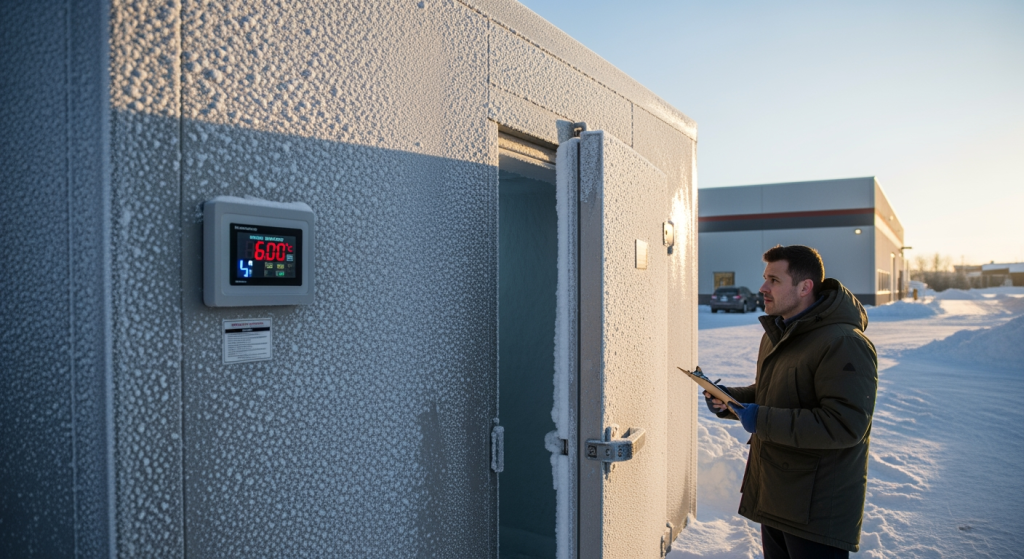
Walk-in cooler and freezer reliability can take an unexpected hit when outdoor temperatures drop—especially for facility teams managing walk-in freezer low ambient issues across restaurants, grocery, convenience stores, and healthcare support spaces in Sun Prairie, WI / Madison area. These problems matter because low outdoor air can change how refrigeration systems reject heat, control head pressure, and manage defrost—leading to temperature swings, nuisance alarms, and avoidable product risk. If you manage multiple locations or a single critical box, winter performance is less about “more cooling” and more about stable controls, correct airflow, and components that can operate reliably in cold conditions. As spring approaches and sites shift from heating-dominant to shoulder-season operation, it’s a smart time to review what winter exposed and what should be corrected before the next cold cycle.
For a deeper foundation on system types and maintenance considerations, see Commercial Refrigeration Systems: Types and Maintenance Best Practices.
Key Points to Know About Low-Ambient Reliability
- Low outdoor temperatures can destabilize head pressure, which may affect metering, capacity, and overall temperature control in the box.
- Defrost performance can change in cold weather, increasing the chance of ice buildup, airflow restriction, and longer recovery times.
- Controls and sensors become more critical—a small calibration or placement issue can create big swings when ambient conditions are extreme.
- Airflow problems often look like “refrigeration problems”, but root causes can include iced coils, blocked fans, or damaged door gaskets.
- Consistency beats peak capacity: stable temperatures and predictable cycling typically protect product better than aggressive setpoint changes.
How Low Outdoor Temperatures Create Refrigeration Control Problems
Most walk-in systems are designed to move heat from inside the box to the outdoors through the condensing unit. In cold weather, the condenser can reject heat very efficiently—sometimes too efficiently. When that happens, the refrigeration system may struggle to maintain the pressure conditions it needs to feed the evaporator correctly and operate controls as intended.
In practical terms, low ambient conditions can contribute to issues such as:
- Low head pressure that can interfere with stable refrigerant metering and cause inconsistent box temperatures.
- Short cycling or irregular run times that make temperatures harder to manage, especially during low-load periods (overnight or low traffic).
- Defrost timing and termination challenges when frost loads and recovery behave differently than they do in milder weather.
- Drain and condensate complications if lines or terminations are exposed to cold zones and are not protected appropriately.
Because these symptoms overlap with other faults (refrigerant charge issues, airflow restrictions, failing fan motors), troubleshooting is usually most effective when it starts with operating conditions, control sequences, and a full visual inspection—not guesswork.

The Real Operational Risks: Product, Labor, and Downtime
Cold-weather refrigeration instability rarely stays “small.” Even when temperatures eventually return to setpoint, the path there can create operational costs and compliance concerns—especially in food and pharmacy environments.
- Temperature excursions and product risk: Repeated swings can increase spoilage potential and complicate documentation for temperature-sensitive goods.
- Nuisance alarms and staff fatigue: Frequent alarms can desensitize teams, increasing the chance a real failure is missed.
- Ice buildup and restricted airflow: Frosted coils and iced fan guards can reduce capacity and extend run time, which can raise energy use.
- Service disruption across multiple sites: If several locations share similar equipment and controls, the same low-ambient weakness can show up repeatedly.
- Component wear: Unstable cycling and repeated defrost stress can contribute to premature wear on contactors, motors, and controls.
Common Missteps That Make Winter Walk-In Problems Worse (Checklist)
- Changing setpoints repeatedly to “force it colder” — This can mask the underlying control or airflow issue and create wider temperature swings.
- Ignoring door and gasket condition — Air infiltration increases frost load and can make defrost and recovery far less predictable.
- Assuming every issue is a refrigerant charge problem — Low ambient symptoms can look similar to charge issues, but the fix may be control-related.
- Overlooking condenser airflow and placement — Wind exposure, snow drift zones, or blocked louvers can change how the unit behaves in cold weather.
- Letting ice accumulation become “normal” — Persistent ice suggests a correctable cause (defrost performance, infiltration, airflow, or drainage) that should be addressed.
- Skipping documentation of when the problem happens — Without notes on time of day, outdoor conditions, and alarm history, diagnosis often takes longer.

A Smart Winter Reliability Plan for Walk-In Coolers and Freezers (Checklist)
- Log symptoms with context: Record alarm codes, time of day, approximate outdoor conditions, and whether the site was in a low-load period.
- Inspect door hardware and gaskets: Look for gaps, torn seals, misaligned doors, and closer issues that allow warm, moist air into the box.
- Confirm airflow basics: Keep product and packaging clear of evaporator discharge/return paths and avoid stacking that blocks circulation.
- Review defrost performance: Note frequency of heavy frost, long recovery times, and any recurring ice at fans or coil surfaces.
- Check drain integrity: Identify recurring water or ice at the evaporator drain area and document patterns for service follow-up.
- Standardize across locations: For multi-site operators, align setpoints, alarm thresholds, and inspection routines so issues are comparable.
- Schedule preventative maintenance before peak risk: Use planned visits to verify controls, sensors, electrical connections, and overall system condition.
Professional Insight: The Pattern Behind “Random” Winter Alarms
In practice, we often see “random” winter walk-in alarms trace back to a combination of small issues that only become obvious in low ambient conditions—like marginal door gaskets increasing frost load, paired with controls that aren’t set up to maintain stable operating pressure in the cold. Individually, each issue may look minor; together, they can create a cycle of icing, defrost strain, and temperature instability that repeats until the underlying causes are corrected.
Signs It’s Time to Bring in Commercial Refrigeration Support
If your team is seeing any of the thresholds below, it’s usually time to involve a qualified commercial refrigeration provider rather than continuing to reset alarms or adjust setpoints.
- Recurring temperature excursions that return after resets or short-term adjustments
- Frequent ice buildup on evaporator coils, fan guards, or around the drain area
- Repeated nuisance alarms tied to overnight/low-load periods or cold outdoor conditions
- Unusual cycling behavior (rapid cycling, long run times, or inconsistent run patterns)
- Evidence of airflow restriction (weak discharge air, uneven box temperatures, or product freezing in “hot spots”)
- Multiple locations showing similar symptoms, suggesting a systemic setup or maintenance gap
Common Questions Answered
Why do walk-in freezers act up when it’s very cold outside?
Very cold outdoor air can change how efficiently the condenser rejects heat, which may lead to unstable operating pressures. That instability can affect how the system feeds the evaporator and how reliably it holds temperature, especially during low-load periods.
What are the most common warning signs of low-temperature operational problems?
Common signs include repeated alarms, temperature swings that come and go, unusual cycling patterns, and persistent frost or ice buildup that returns shortly after defrost.
Can door gaskets really cause icing and temperature problems?
Yes. Damaged or misaligned gaskets can allow warm, moist air into the box. That moisture can increase frost load on the coil and fans, which reduces airflow and makes the system work harder to maintain stable temperatures.
Is it safe to keep lowering the setpoint to stop alarms?
Adjusting setpoints may temporarily change symptom timing, but it can also create larger swings and add stress to the system. It’s typically more effective to document conditions and address the underlying cause—air infiltration, airflow restriction, defrost performance, or control stability.
How can multi-site operators reduce repeat issues across locations?
Standardizing inspection routines, documenting alarms consistently, and aligning control settings and maintenance schedules can make issues easier to spot early and correct systematically rather than location by location.
Where to Go from Here
Winter exposes weak points in walk-in refrigeration—especially when controls, airflow, and defrost performance aren’t aligned for cold outdoor conditions. By focusing on consistent operating behavior, clear documentation, and routine inspections, facility teams can reduce nuisance alarms and protect temperature-sensitive inventory. If issues repeat across shifts or locations, it’s often a sign the root cause needs professional diagnosis rather than more setpoint changes.
Learn More About Our Services
Discover how we can help you achieve your goals.