
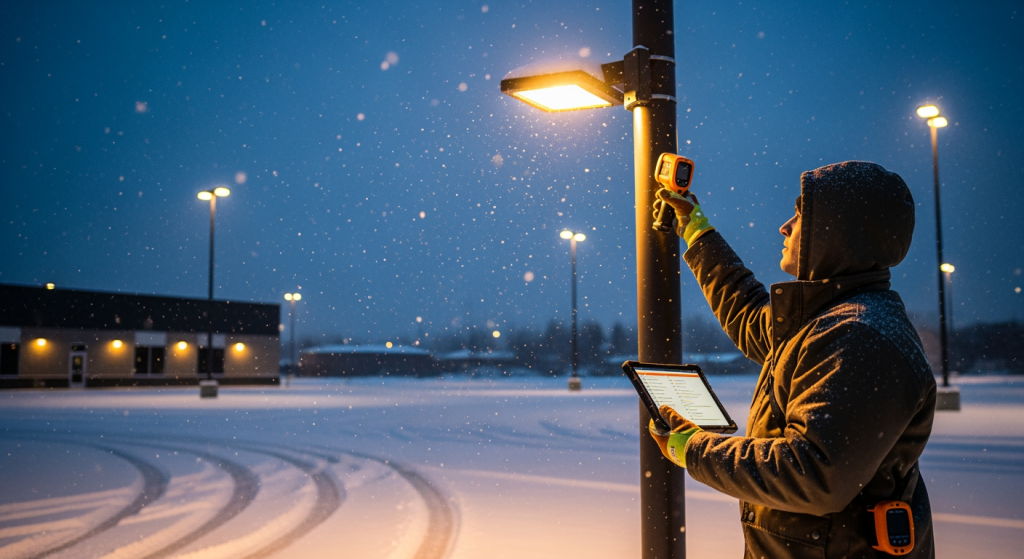
Commercial parking lot lighting maintenance often gets attention only after a light goes out—but winter conditions can make small issues show up faster and feel more disruptive. If you manage facilities, retail sites, healthcare buildings, restaurants, or multi-location properties in the Denver, CO metro, reliable exterior lighting supports safer walking paths, clearer visibility for drivers, and more consistent site operations. Colder months also tend to bring longer nights and tougher conditions for outdoor fixtures, which can expose weak connections, aging lamps, and compromised seals. The goal isn’t to “over-maintain,” but to inspect the right areas on a predictable cadence so you can reduce surprises and prioritize repairs. For broader context on how building systems maintenance ties together, see Understanding Commercial HVAC Systems.
The Essentials for Winter Exterior Lighting Upkeep
- Inspect for water intrusion and failed seals: Moisture inside fixtures can lead to flicker, corrosion, and premature component failure.
- Verify photocells and timers are behaving as expected: Shorter days can expose misalignment, sensor blockage, or incorrect schedules.
- Prioritize high-traffic and high-risk zones first: Entrances, accessible routes, loading areas, and curb lines typically deserve first attention.
- Look for early electrical warning signs: Intermittent outages, buzzing, frequent resets, or hot spots can indicate loose connections or failing drivers/ballasts.
- Document what you find: A simple log of fixture locations, symptoms, and dates helps you plan repairs and avoid repeat troubleshooting.
How Winter Conditions Stress Outdoor Lighting Systems
Exterior lighting systems are exposed year-round, but winter can be a turning point for reliability. Temperature swings can stress components and connections, while moisture can find its way into compromised housings or conduit. When that happens, you may see issues like flickering, partial outages, or lights that cycle on and off.
Common system elements that deserve attention include:
- Fixtures and lenses: Cracked lenses, brittle gaskets, or damaged housings can allow moisture and debris inside.
- Drivers/ballasts (by fixture type): Aging electronics may become less tolerant of cold starts or fluctuating power.
- Photocells, timers, and controls: Sensors can be obstructed or mispositioned, and schedules can drift from actual operating needs.
- Wiring, conduit, and junction points: Loose connections and corrosion tend to show up at splices, handholes, and junction boxes.

The Operational Cost of Letting Exterior Lights Slide
When parking lot or façade lighting becomes unreliable, the impact can extend beyond visibility. Dim or inconsistent lighting can increase the likelihood of slips, trips, and vehicle near-misses—especially around curbs, crosswalks, and loading zones. It can also create operational distractions for staff who end up reporting the same outage repeatedly or placing temporary workarounds in high-traffic areas.
From a planning standpoint, deferred lighting upkeep can also lead to:
- More emergency calls: Issues that could have been scheduled become urgent when multiple fixtures fail.
- Harder troubleshooting: Intermittent problems are often tougher to diagnose after they escalate.
- Inconsistent site standards: Multi-site brands may struggle to keep lighting levels and appearance consistent across locations.
Common Winter Lighting Maintenance Mistakes (Use This Checklist)
- Ignoring “minor” flicker: Flicker can be an early indicator of driver/ballast wear, moisture intrusion, or connection issues.
- Only replacing lamps without checking the cause: Repeated failures may point to voltage problems, failing controls, or water ingress.
- Skipping control checks: Photocells and timers that are misconfigured can mimic equipment failure and waste troubleshooting time.
- Not mapping fixture locations: Without a site map or numbering, teams lose time identifying which light is actually out.
- Overlooking handholes and junction boxes: Many recurring issues live in the connection points, not the fixture itself.
- Deferring repairs in “low priority” areas: Dark corners can become complaint generators and may affect perceived site safety.

A Practical Winter Inspection Plan for Facility Teams
- Start with a night walk-through: Note outages, dim areas, and inconsistent on/off behavior across zones.
- Confirm control operation: Check that photocells/timers align with current operating hours and aren’t blocked or mis-aimed.
- Inspect fixture condition: Look for cracked lenses, missing hardware, damaged seals, and signs of moisture.
- Check electrical connection points: Prioritize pole bases, handholes, and junction boxes for corrosion, loose terminations, and water presence.
- Prioritize critical paths first: Entrances, accessible routes, pickup/drop-off zones, and loading areas should be addressed before secondary areas.
- Create a simple repair list: Capture fixture ID/location, symptom, and urgency (now/soon/monitor).
- Plan for parts and access: Coordinate lift needs, site access windows, and any operational constraints before dispatch.
Professional Insight: What Most Teams Miss in Winter Walkthroughs
In practice, we often see that the fastest wins come from tightening up the “information flow”—a consistent naming/numbering system for poles and fixtures, plus a short symptom log. When technicians arrive with clear locations and repeatable symptoms, it tends to reduce time spent searching the site and helps focus effort on the most likely failure points first.
Signs It’s Time to Bring in Commercial Lighting Support
- Multiple fixtures fail in the same area: This can indicate a circuit, control, or connection issue rather than individual fixture failures.
- Lights cycle on/off or trip repeatedly: Intermittent behavior may point to moisture, failing drivers/ballasts, or electrical faults.
- Visible water inside fixtures or boxes: Moisture intrusion should be addressed promptly to prevent corrosion and repeat failures.
- Safety-critical zones are underlit: Entrances, accessible routes, and loading areas should be treated as high priority.
- You need consistent standards across sites: Multi-location operations often benefit from a repeatable inspection and repair approach.
Common Questions About Winter Exterior Lighting
How often should exterior lights be inspected during colder months?
Many facility teams use a simple routine: a periodic night walkthrough to spot outages and dim zones, plus targeted checks after maintenance work or recurring complaints. The right cadence depends on site traffic, safety risk, and how critical the area is to operations.
What usually causes outdoor lights to flicker or cycle on and off?
Flicker or cycling can be tied to moisture intrusion, loose connections, aging drivers/ballasts, or control issues (like photocells that are obstructed or misaligned). A symptom log by fixture location helps narrow the cause faster.
Are photocells and timers worth checking, or should we just replace fixtures?
Controls are worth checking. Misconfigured timers, blocked sensors, or failing photocells can create “false failures” that look like bad fixtures. Verifying control behavior can prevent unnecessary replacements.
Which areas should be prioritized first when budgets are tight?
Focus first on entrances, accessible routes, crosswalks, pickup/drop-off lanes, and loading areas. These zones typically carry higher safety and operational impact when lighting is inconsistent.
What information should we capture when reporting an exterior lighting issue?
Include the exact location (pole/fixture ID if available), the symptom (out, dim, flicker, cycling), when it happens, and whether nearby fixtures are affected. That detail helps speed troubleshooting and parts planning.
Taking Action Before Small Issues Become Nighttime Problems
Winter is a practical time to tighten up exterior lighting reliability because longer nights and harsher conditions can reveal weak points quickly. A focused inspection plan—controls, seals, connection points, and priority zones—helps reduce repeat outages and supports safer site operations. If you manage multiple locations, consistent documentation and fixture identification can be as valuable as the repair itself. Build a short checklist, schedule walkthroughs, and escalate recurring issues before they spread across a circuit.
Book Your Consultation
Schedule a free consultation with our experts.